
By Naswiha Nasarin | Freelance Digital Marketer E-E-A-T SEO 2026 A website can look professional without being trustworthy. It can have beautiful graphics, carefully written pages, impressive animations and strong SEO. But when someone lands on your website, one question remains: “Why should I trust this website?” That question is at the heart of modern digital visibility. In 2026, building an online presence is no longer simply about publishing content and trying to rank for keywords. Businesses, professionals and personal brands need to demonstrate who they are, what they know, what they have experienced and why their information deserves attention. This is where E-E-A-T — Experience, Expertise, Authoritativeness and Trustworthiness — becomes important. E-E-A-T provides a useful framework for thinking about the credibility of your website and its content. It is not a magic SEO score. It is not a plugin. And it is not something you can create simply by writing “expert” on your website. Instead, strong E-E-A-T is demonstrated through the total experience your website provides. What Is E-E-A-T? E-E-A-T stands for: Experience Have you personally experienced, used, tested, practiced or worked with the subject you are discussing? Expertise Do you demonstrate relevant knowledge and understanding of the topic? Authoritativeness Do other credible people, websites or organizations recognize your knowledge or work? Trustworthiness Can visitors trust the information, people, business and processes behind your website? Among these concepts, trust is particularly important. Google’s Search Central guidance explains that E-E-A-T itself is not a specific ranking factor or a single score. Instead, Google’s systems use a range of signals that can identify content demonstrating aspects of E-E-A-T. That distinction matters. You should not approach E-E-A-T as: “How do I get an E-E-A-T score?” A better question is: “How can my website demonstrate that the information, people and business behind it are trustworthy?” Why E-E-A-T Matters for Websites in 2026 The modern search journey is becoming increasingly complex. A person may discover a brand through: Google Search AI-generated search experiences Images Videos Social media Maps Reviews Online communities Brand mentions Recommendations Direct searches for a person’s name or business This means your website is no longer operating in isolation. Your website becomes part of a larger digital identity ecosystem. A visitor may discover your name somewhere else and then visit your website to verify you. They may read one of your blog posts before looking at your services. They may check your About page. They may look for evidence of your experience. They may search for reviews. They may want to know whether your contact information is genuine. The website therefore has an important role: It should make your credibility easier to understand and verify. E-E-A-T Is More Than SEO One of the biggest misunderstandings about E-E-A-T is treating it as an SEO trick. It isn’t. Imagine two websites offering the same service. Website A says: “We are the best digital marketing experts.” Website B explains: who runs the business what experience they have what services they provide how they work what tools they use what qualifications they have what projects they have completed what clients say about them how visitors can contact them where their information comes from The second website gives visitors more information with which to evaluate credibility. That is the practical value of E-E-A-T. Don’t just claim credibility. Demonstrate it. The Relationship Between E-E-A-T and Your Website E-E-A-T can be reflected across almost every part of your website. Think of your website as a collection of trust signals. Homepage Communicates who you are and what you do. About Page Explains your background, experience and identity. Services Page Shows what you offer and how you approach your work. Portfolio Provides evidence of practical work. Blog Demonstrates knowledge and expertise. Testimonials Provide genuine customer experiences. Contact Page Makes your business identity and communication channels transparent. Certifications Provide evidence of relevant education or training. Case Studies Demonstrate real-world experience and outcomes where claims can be supported. Author Information Connects content with a real person. When these elements work together, your website becomes more than an online brochure. It becomes a digital proof system. 1. Experience: Show What You Have Actually Done The first “E” represents Experience. Experience is about demonstrating first-hand involvement with the subject. For example, instead of writing: “SEO is important for businesses.” You could explain: “While developing my digital marketing skills, I have been exploring how SEO connects technical optimization, content strategy and user intent.” The second statement provides context about the author’s relationship with the topic. Experience can be demonstrated through: personal observations project work practical examples case studies screenshots experiments lessons learned original research before-and-after examples documented processes real client experiences, when permission allows For a personal-brand website Create an Experience section that answers: What have I actually done? For example: Digital marketing projects SEO learning and implementation Content strategy work Website projects Campaign experiments Analytics practice Certifications Professional development Do not exaggerate. A smaller amount of genuine experience is more credible than a large collection of unsupported claims. 2. Expertise: Demonstrate What You Know Expertise is about knowledge. But expertise should not simply be announced. Instead of repeatedly saying: “I am a digital marketing expert.” your website can demonstrate knowledge through useful content. For example: SEO guides Digital marketing explanations Industry analysis Practical tutorials Case studies Original frameworks Research-based articles Data interpretation Marketing experiments Frequently asked questions Your blog can become an important part of your expertise layer. Every high-quality article gives visitors another opportunity to understand how you think. A useful principle Don’t use your blog only to attract traffic. Use it to demonstrate how you solve problems. 3. Authoritativeness: Build Recognition Authority is not something you simply assign to yourself. It develops through recognition. Your authority ecosystem can include: Professional profiles Relevant certifications Published articles Industry mentions Genuine testimonials Partnerships Interviews Professional communities Relevant backlinks Speaking opportunities Portfolio work Consistent professional identity For a personal brand, consistency is especially important. Your name, professional description,
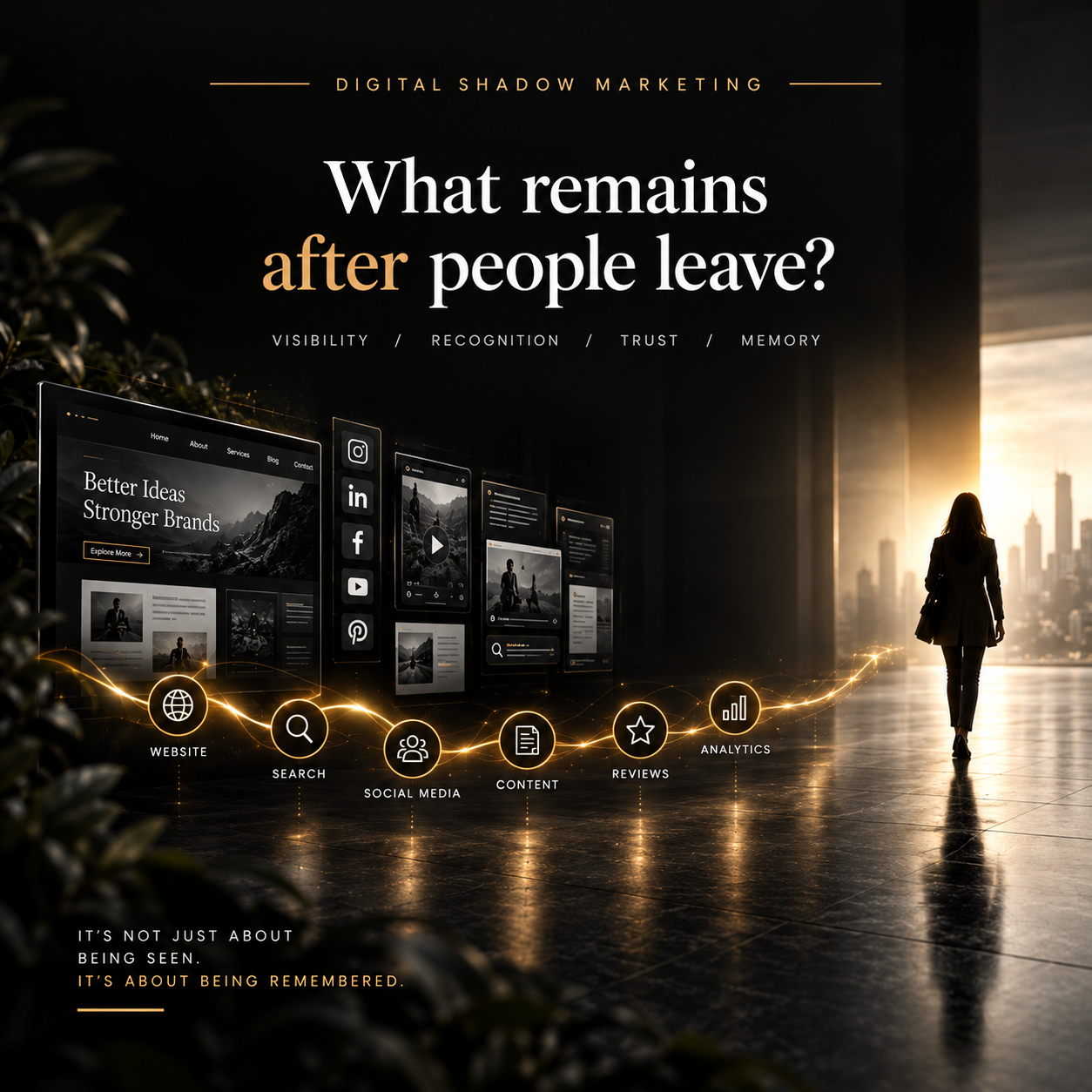
The Digital Shadow: What Your Brand Leaves Behind After People Leave
By Naswiha Nasarin | Freelance Digital Marketer A new way to think about digital marketing, brand memory and online presence in 2026 Most digital marketing conversations begin with a familiar question: “How many people saw my content?” But there is another question that may be even more important: “What did people take away after they saw it?” A person may visit your website without contacting you. They may watch your Reel without liking it. They may read your blog without commenting. They may see your name in search results and continue scrolling. They may discover your profile today and return three weeks later. From an analytics dashboard, some of these interactions can appear insignificant. But human decisions do not always happen at the moment of interaction. Sometimes the real impact of digital marketing happens later. That leads to a concept I call the Digital Shadow. Your digital shadow is the collection of impressions, associations, information, experiences and signals that remain with people after they leave your digital presence. It is what your brand leaves behind. And sometimes, that shadow influences the next search, the next visit, the next conversation—or eventually, the next decision. What Is a Digital Shadow? A digital shadow is not a single post, website page or advertisement. It is the combined impression created by your digital presence over time. Imagine someone discovers your business through an Instagram post. They do not contact you. A few days later, they see your name again. Then they encounter your website in Google. Later, they read one of your articles. A week after that, they see your profile while searching for a service. Eventually, they remember your name when they actually need that service. No individual interaction necessarily produced a visible conversion. But together, they created familiarity. That accumulated presence is what this article calls the Digital Shadow. Digital Shadow = Presence + Information + Recognition + Experience + Memory The idea changes the way we think about digital marketing. Instead of asking only: “Did this post convert?” we can also ask: “What did this post contribute to the person’s perception of the brand?” The Problem With Measuring Everything Immediately Digital marketing has become increasingly measurable. We can track: Impressions Reach Clicks Engagement Website visits Leads Conversions Watch time Search traffic Returning visitors These metrics are useful. But they do not always capture the entire human journey. Consider two people. Person A Sees your post → clicks → contacts you. Person B Sees your post → leaves → searches your name later → visits your website → reads an article → follows you → returns several weeks later → contacts you. Person A has a simple measurable journey. Person B has a longer digital journey. The second journey may contain several interactions that appear disconnected when viewed individually. This is why digital marketing should not be evaluated only through isolated moments. Sometimes the sequence matters more than the individual signal. The Digital Shadow Is Built in Layers Your digital shadow does not come from one platform. It is created by the collection of experiences people encounter across your digital ecosystem. Think of it as six layers. 1. The Identity Layer This answers: Who are you? Your: Name Brand Logo Professional title Website Profile descriptions Visual identity Areas of expertise should communicate a reasonably consistent identity. When someone encounters you in different places, they should be able to recognize that these digital properties belong to the same person or brand. 2. The Knowledge Layer This answers: What do you know? Your blog posts, guides, videos, educational posts and explanations contribute to this layer. A person may not remember every sentence you publish. But they may remember: “This person understands SEO.” or: “This business knows how to explain complicated things clearly.” That association becomes part of your digital shadow. 3. The Evidence Layer This answers: Can I believe what you say? Evidence can include: Portfolio projects Case studies Reviews Testimonials Demonstrations Certifications Original work Educational content Client outcomes Professional experience Marketing claims become stronger when people can find supporting evidence. 4. The Experience Layer This answers: What was it like interacting with you? A beautiful Instagram profile cannot compensate for a confusing website. A strong advertisement cannot completely repair a poor customer experience. A professional website cannot replace unclear communication. Every interaction contributes to the experience people associate with your brand. 5. The Recognition Layer This answers: Do I remember you? Recognition is created through repeated exposure and consistent meaning. Not necessarily by repeating the same post. Instead, the audience repeatedly encounters the same core identity expressed through different content. For example: Your blog teaches. Your Instagram explains. Your Reel demonstrates. Your website positions. Your portfolio proves. Different formats. One identity. 6. The Memory Layer This is where the digital shadow becomes especially interesting. A person may forget the exact headline. They may forget the date. They may forget where they saw you. But they may remember: your name your style your expertise your message your visual identity the problem you helped them understand That remaining memory can become valuable later. Your Website Is Not Just a Destination Many businesses still treat their website as a place people visit after seeing an advertisement. But your website can function as the central memory hub of your digital shadow. Your social media introduces you. Your content demonstrates your thinking. Your search presence helps people discover you. Your reviews provide evidence. Your website connects those pieces. This makes the website more than a digital brochure. It becomes the place where fragmented signals can become a coherent identity. Google itself now describes Search profiles as a way to bring together content from across the web and social platforms into one destination. That reflects a broader shift: Digital identity is becoming increasingly distributed across multiple platforms. The Shadow Is Bigger Than Your Social Media Feed A common mistake is to think: Digital presence = social media It is much larger than that. Your digital shadow may include:

The Quiet Signal: Why the Best Digital Marketing Is Not Always the Most Visible
By Naswiha Nasarin | Freelance Digital Marketer Introduction: What If Your Best Marketing Is Happening When Nobody Is Liking Your Post? Digital marketing has taught us to watch numbers. Likes. Views. Shares. Followers. Reach. Clicks. Impressions. These numbers are useful. But they can create a strange illusion. We can begin to believe that the loudest content is always the most successful content. A post receives thousands of views, and we call it successful. A video gets shared repeatedly, and we call it successful. A page gains followers, and we call it successful. But what happens when someone quietly sees your content today, remembers your name three weeks later, searches for you, reads your website, and finally becomes a customer? There may be no dramatic viral moment. No huge spike. No spectacular screenshot. Just a series of small signals. This is what I call: The Quiet Signal. A Quiet Signal is a meaningful digital interaction that may not create immediate visible engagement but contributes to how a person understands, remembers, trusts, or eventually chooses a brand. And in a digital environment increasingly filled with noise, these quiet signals may become more important than marketers realize. What Is a Quiet Signal? A Quiet Signal is any digital interaction that communicates something meaningful about a brand without necessarily producing an obvious public reaction. For example: Someone saves your Instagram post. Someone reads your blog but doesn’t comment. Someone watches your video without liking it. Someone visits your About page. Someone checks your services twice. Someone sees your name repeatedly across different platforms. Someone remembers your advice and returns months later. Someone sends your website to a friend privately. Someone searches your brand after seeing your content. None of these moments necessarily looks impressive inside a social media dashboard. But they can matter. The important question therefore becomes: Are we measuring only visible reactions, or are we designing experiences that create invisible memory? The Loud Signal vs. The Quiet Signal Consider two types of digital marketing. The Loud Signal A post gets: It creates immediate attention. The Quiet Signal Another piece of content gets: The second piece may not look impressive on a public dashboard. But its influence may be deeper. This does not mean engagement metrics are unimportant. It means: Visibility and value are not always measured on the same scale. The Problem With the Visibility Obsession Many brands have become obsessed with being seen. Post more. Create more reels. Use trending audio. Follow trends. Publish every day. Increase reach. Grow followers. But there is a question behind all of this: Seen for what? If someone sees your brand for two seconds and forgets it immediately, visibility may have limited long-term value. If someone sees a simple educational post, saves it, remembers your name and returns when they need help, the interaction may be far more meaningful. Marketing should therefore move from: “How many people saw us?” toward: “What did people understand, remember, or do because they saw us?” The Quiet Signal Equation I would describe the concept using a simple framework: Quiet Signal = Relevance + Recognition + Repetition + Reliability Relevance Does your content matter to the person seeing it? Recognition Can they identify your brand when they encounter it again? Repetition Do they encounter a consistent message over time? Reliability Does your brand repeatedly deliver something useful or meaningful? When these four elements work together, a small interaction can become part of a longer customer journey. 1. Relevance: Stop Creating Content Just to Fill the Calendar A content calendar can become dangerous when the calendar becomes more important than the audience. You may have: Monday — educational post. Tuesday — reel. Wednesday — quote. Thursday — carousel. Friday — promotional post. Everything looks organized. But organization is not strategy. Before creating content, ask: “Why should someone care about this today?” A useful post should connect to something the audience: Relevance gives content a reason to exist. 2. Recognition: Become Familiar Before You Ask to Be Chosen People often need repeated exposure before a brand becomes familiar. This doesn’t mean repeating the same advertisement. It means creating recognizable patterns. For example: The same visual identity. The same professional positioning. Similar subject areas. A recognizable writing style. Consistent terminology. Recurring content themes. A recognizable perspective. Over time, people may begin to think: “I know this type of content.” Then: “I know this brand.” And eventually: “I think this is the person I need.” Recognition is quieter than virality. But it can be powerful. 3. Repetition: One Message Is Rarely Enough Imagine telling someone: “I provide SEO services.” once. They may forget. Now imagine that over several months they encounter your content explaining: They gradually associate your name with SEO. You didn’t repeat one advertisement. You repeated the meaning. That distinction matters. Don’t repeat the same message. Repeat the same strategic meaning through different useful ideas. 4. Reliability: Your Content Should Keep Its Promise Imagine a brand that constantly promises valuable content. But every post is: “Buy now.” “Limited offer.” “Book today.” “Don’t miss this.” “Contact us.” Eventually, the audience learns what to expect. Now imagine another brand that consistently teaches something useful. People may begin to associate that brand with usefulness. That is a quiet signal. Every interaction contributes to a question: “What can I expect from this brand?” Consistency creates expectations. Repeatedly meeting those expectations can strengthen trust. The Quiet Signal Does Not Mean “Post Less” This concept should not be misunderstood. Quiet marketing does not mean: Instead, it means: Don’t confuse volume of attention with depth of influence. A viral campaign can be valuable. A high-performing advertisement can be valuable. A trending reel can be valuable. But they become more meaningful when they connect to a larger brand system. The Digital Echo Here is another way to understand the Quiet Signal. A person sees your content today. They do nothing. A week later, they see your name again. Still nothing. A month later, they have a problem related to